Advertisement
Home Blog Page 6

Bill Gates plans to close Foundation and give away his fortune

0

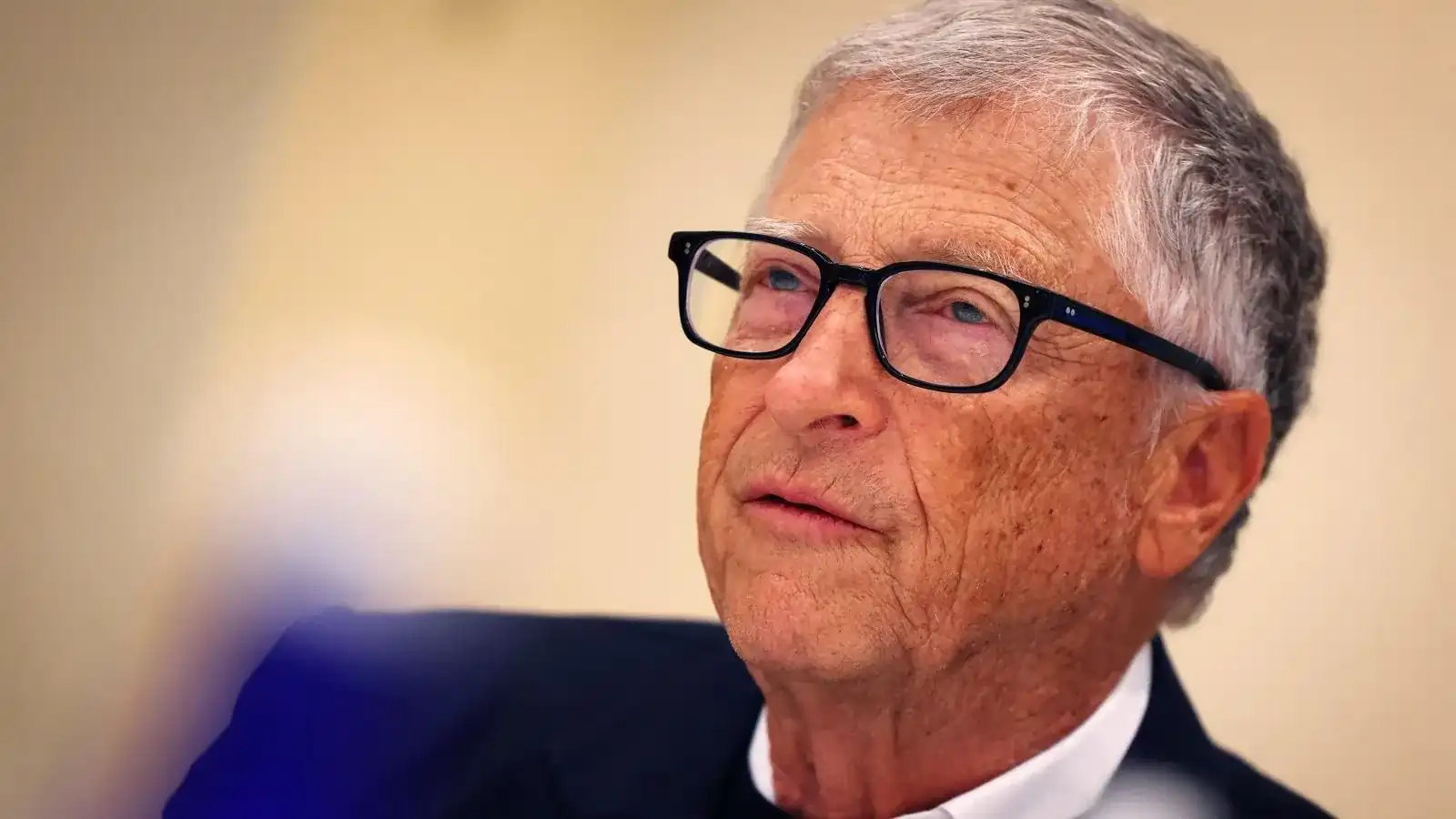
Bill Gates, co-chairman of the Bill and Melinda Gates Foundation, plans to close the Gates Foundation and give way his personal wealth. He said that when he dies, people will say a lot of things about him but he is determined that ”he died rich” will not be one of them.

His net worth is currently estimated at $168 billion. He plans to disburse his fortune and close the doors of the Gates Foundation on December 31, 2025. Since the Foundation’s launch in 2000, it has contributed more than $100 billion to global causes-mainly to eradicate poverty and diseases, to address climate change and to expand access to healthcare and education.
His goals for the next two decades include reducing the deaths of mothers and young children from preventable causes, to help eradicate diseases like polio, malaria and measles, funding advances in education and agriculture in African nations to help millions of people to break free from poverty.

Actress Priyanka Chopra dazzles in a diamond studded mini dress at Met Gala

0

Actress Priyanka Chopra stole the spotlight with her dazzling diamond mini dress that she wore at Met Gala 2025. She appeared alongside husband Nick Jonas. Her party dress was adorned with crystals and diamonds.

Nick Jonas was seen donning a grey suit designed by Bianca Saunders that he accessorised with a diamond necklace. The couple made a stylish entry at the star studded event and grabbed all the attention.
There were pictures and videos from the after party that are going viral on social media. Priyanka’s white mini sleeveless dress had a round necklines and was embellished with diamonds and crystals that sparkled under the bright lights, adding to her glowing glamorous look.
She paired the dress with diamond hoop earrings and stylish high heels. Her make up was natural and glowing with a smooth matte base that had a tint of bronze, brown toned eye shadow, eyeliner and mascara. She wore a brick red lipstick to complete the look.

Rohit Sharma announces retirement from Test cricket

0

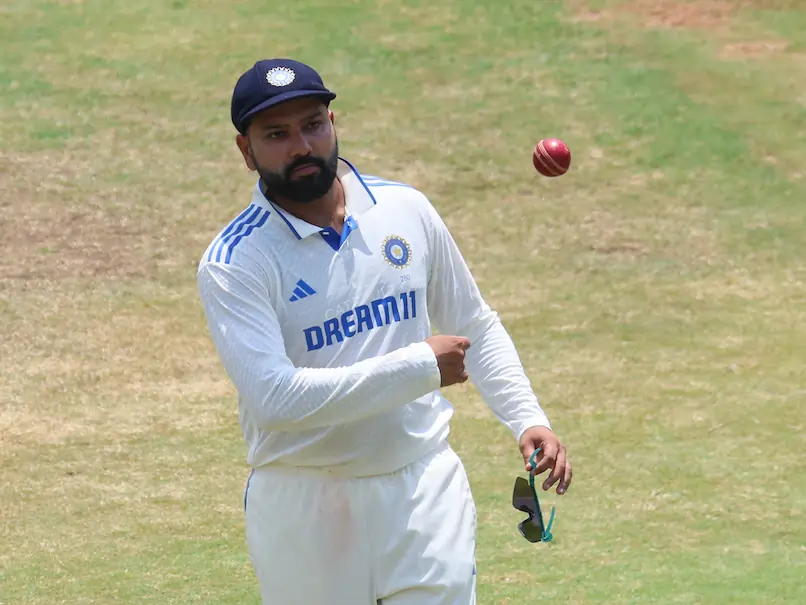
The Indian cricket team will get a new captain as Rohit Sharma has announced his retirement from Test cricket with immediate effect. He will however continue to play for India in the ODI format.

According to reports, he announced his retirement on May 7, Wednesday after reports of him being sacked as Test captain went viral.The 38 year old cricketer scored 4301 runs in 67 Tests with 12 hundreds and 18 half centuries. He has an average of 40.57 runs.
Rohit Sharma while announcing his retirement, took the opportunity to thank people for their love and support over all the years. He said that it was an honour for him to represent India in the Test cricket format. He released his statement on his Instagram handle.
The selectors are looking for a new captain for the England tour and they want to groom a leader for the future. Some players who may be the choice of captain are Jasprit Bumrah, the vice-captain, Shubman Gill, KL Rahul and Rishabh Pant.

Cardinals begin conclave to elect new pope

0

Roman Catholic cardinals from across the globe are gathered at the Sistine Chapel to choose a new pope. He will head the 1.4 billion Catholic population around the world.

There are 133 cardinals who will cast secret ballots to elect a successor for Pope Francis who passed away recently. The cardinals will not have any contact with the outside world during this process called the conclave and they will not be allowed to leave until they reach an agreement.
Once the conclave reaches a decision, it will be signalled with a plume of white smoke from the Vatican roof. This will be the announcement of a new pontiff from a balcony overlooking St. Peter’s Square and will be watched by governments and the faithful.
The papal conclave will start with a single ballot on the first day with four rounds of voting each day afterward until a candidate receives two-thirds of the vote.This process could take weeks or maybe even more. The election of Pope Francis took only a few days and he was elected on the fifth ballot.

Sitting judge of the Madras High Court passes away

0

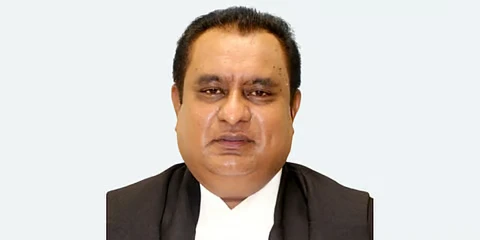
Justice J. Sathya Narayana Prasad, a sitting judge of the Madras High Court passed away due to cardiac arrest on Tuesday, May 6, 2025. He was 56. He reportedly experienced discomfort at his residence and was rushed to a private hospital where he passed away.

He was born on March 15, 1969 at Thanjavur and hailed from a family with a strong legal background. His father late R.Jaiprasad was a District and Sessions Judge in various districts including Madurai, Kanyakumari and Krishnagiri.
He was a native of Minnal village near Arakkonam in the erstwhile North Arcot district presently Vellore district. He did his schooling at Voorhees Higher Secondary School in Vellore and followed it up with a bachelor and Master’s degree in History. He then pursued law at the University of Delhi.
He enrolled as an advocate in 1997 and joined advocate A. Ilango as a junior. He started independent practice in 2000 and was elevated as a judge of the Madras High Court in 2021.

Maldives President Muizzu sets world record with 15- hour press conference

0

Maldives President Mohamed Muizzu set a world record with a marathon 15- hour press conference on Saturday that began at 10 am and stretched past midnight. He broke the previous record of 14 hours that was set by the Ukrainian President Volodymyr Zelensky in 2016. President Muizzu  answered the questions posed by the public, by journalists and made brief pauses for prayers.

In October 2016, Zelensky held a 14 hour press conference and broke an earlier record of over 7 hours set by Belarussian strongman Alexander Lukashenko.
Mohamed Muizzo came to power in 2023 and marked the island nation’s rise by two places to 104th out of 180 countries in the 2025 World Press Freedom Index.
He confirmed that there are no serious concerns with the bilateral agreements between the Maldives and India. President Muizzu said that he was working in line with his pledge to disclose the military agreements.

President Droupadi Murmu to become first Indian President to visit Sabarimala temple

0

President Droupadi Murmu will visit Sabarimala Temple in Kerala on May 19 and will become the first Indian President to visit the revered hill shrine. There will be security restrictions and ceremonial preparations due to which public darshan will be restricted.

She will arrive in Kerala on May 18 and visit the shrine the next day. She will make history by becoming the first sitting President of India to offer prayers at the Sabarimala Sree Ayyappa Temple in Kerala.
The Travancore Devaswom Board that manages the temple, confirmed her upcoming visit and called it a landmark moment for both the temple and the nation.
The President is on a two day visit to Kerala where she is scheduled to attend a private function in Kottayam district.
Her visit will coincide with the conclusion of poojas marking the Malayalam month of Edavam. The temple has announced restrictions on May 18 and 19 and devotees will not be allowed darshan on those days

Shah Rukh Khan emerges as fourth richest actor in the world

0

Bollywood actor Shah Rukh Khan has emerged as the fourth richest actor in the world with a 7,400 crore net worth.. The actor is making his MET GALA 2025 debut

Topping the list is Arnold Schwarzenegger with a net worth of $1.49 billion equivalent to Rs 12,814 crore.Second on the list is Dwayne Johnson called ‘The Rock’ with a net worth of $1.19 billion equivalent to Rs 10,234 crore. Tom Cruise follows closely behind with a net worth of $891 million equivalent to Rs 7,662 crore.
Shah Rukh Khan is currently in New York for the grand MET GALA2025 event to be held at the iconic Metropolitan Museum of Art. He will be seen flaunting a Sabyasachi outfit. Other stars who will be attending the event are Priyanka Chopra, Kiara Advani and Diljit Dosanjh
Shah Rukh earlier attended the WAVES 2025 Summit held at the Jio World Centre in Mumbai. Filmmaker Karan Johar moderated a session with Shah Rukh and actress Deepika Padukone.

Billionaire Warren Buffett to retire at the end of this year

0

Warren Buffett, an American business magnate, investor and philanthropist is currently Chairman and CEO of Berkshire Hathaway. He made a shocking decision to retire by the end of the year. His decision has shocked shareholders and will bring the curtains down on a six-decade run of leading Berkshire Hathaway.

Buffett said that Vice Chairman Greg Abel will replace him. Abel has been Buffett’s designated successor for years but it was assumed that he would take over the reins only after the death of Warren Buffett. Earlier, the 94 year old Buffett said that he had no plans to retire.
Abel said that he is both humbled and honoured to be part of Berkshire. Moreover, investors have complete faith in his capacity to run Berkshire.
In many respects. Abel has already been running much of the company for many years and has hands-on experience.

The Reasonable Man and the Forgotten Woman: Rethinking the Law’s  Standard of Judgment
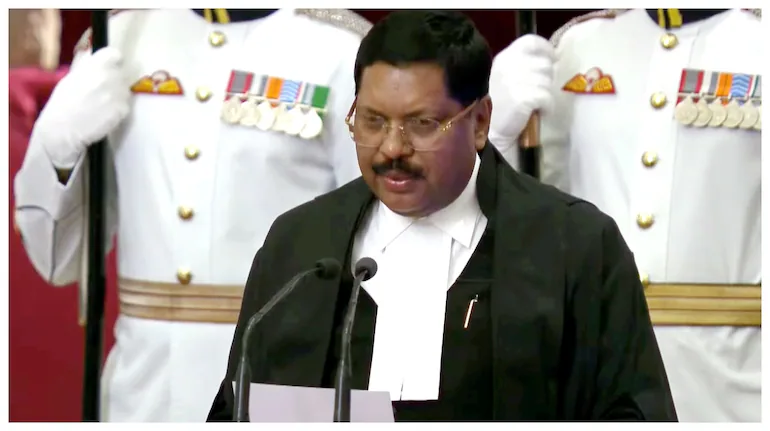
By Justice N.Anand Venkatesh

0

The law is often seen as the great equalizer-a system designed to be impartial, objective, and fair. Yet, beneath the surface of its most fundamental doctrines, the law reveals the fingerprints of those who shaped it. Nowhere is this more evident than in the “reasonable man” standard, a cornerstone of the law of evidence and negligence. But why did lawmakers enshrine the test of the “reasonable man,” and not the “reasonable woman”? Is it truly possible for one standard to fit all, or does this reveal a deeper, more troubling bias within our legal tradition?

The Birth of the “Reasonable Man”

The concept of the “reasonable man” emerged in the 19th century, most notably in the English case of Vaughan v Menlove (1837), where it was decided that a person’s conduct should be judged not by their own idiosyncrasies, but by the standard of an ordinary, prudent man. This was intended to create an objective yardstick-one that would prevent subjective excuses from undermining justice.

But the very notion of what is “reasonable” is shaped by the values, experiences, and expectations of those who define it. In Victorian England, lawmakers, judges, and jurors were overwhelmingly male, and so the “reasonable man” was not just a figure of speech-it was a reflection of male norms, perspectives, and priorities.

The Case of Fardell v Potts: A Revealing Example

The case of Fardell v Potts is instructive. Here, the Court of Appeal was asked to consider whether a woman’s conduct should be judged by the same objective standard as a man’s. Mrs. Fardell, the defendant, was held to the same “reasonable man” test as any male defendant. The court made no allowances for her gender, social role, or the different expectations society might have placed upon her.

This was not an isolated incident. Throughout legal history, women have been judged by standards devised without their input, often by men who could not-and did not try to-imagine what it meant to be a woman in their society. The law’s claim to neutrality was, in truth, an erasure of difference.

The Myth of Gender Neutrality

As the law evolved, the language shifted from “reasonable man” to “reasonable person.” On the surface, this appears progressive-a recognition that reasonableness is not the sole province of men. But this linguistic sleight of hand does little to address the deeper issue: the “reasonable person” is stil, in practice, modeled on the reasonable man. The values, experiences, and judgments considered “ordinary” remain those of the dominant group.

This is not mere semantics. In cases of sexual harassment, for instance, courts have long struggled to apply the “reasonable person” standard. What a man considers harmless banter, a woman might experience as threatening or demeaning. In such cases, the “reasonable woman” standard has been advocated and, in some jurisdictions, adopted-an acknowledgment that gender shapes perception, experience, and, ultimately, what is reasonable.

Why Was the “Reasonable Woman” Never Considered?

The answer lies in history. For centuries, women were excluded from the legal profession and from positions of power. The lawmakers, judges, and jurors who shaped the law’s standards were men, and they saw their own experiences as universal. The “reasonable man” was not just a legal fiction; he was the embodiment of the lawmaker himself.

Moreover, the law has always prized uniformity and predictability. Introducing multiple standards-one for men, one for women, perhaps others for different groups-was seen as a threat to legal certainty. But this quest for simplicity came at a cost: it rendered invisible the realities of those who did not fit the mold.

The Call for Change

Today, we recognize that objectivity is not the same as neutrality. A standard that ignores difference is not impartial-it is blind. The law must grapple with the fact that what is reasonable for one person may not be reasonable for another, especially when their lives are shaped by different social expectations, risks, and constraints.

The “reasonable woman” standard is not about special pleading; it is about justice. It is about recognizing that the law’s standards must be rooted in the lived realities of all people, not just those who have historically held power. As society becomes more diverse, the law must evolve to reflect that diversity-not by abandoning objectivity, but by enriching it.

Conclusion: Toward a Truly Reasonable Standard

Fardell v Potts and countless other cases reveal the limitations of a one-size-fits-all approach. The law’s insistence on the “reasonable man” standard is a relic of a less inclusive era. To move forward, we must ask: Whose reasonableness are we measuring? Whose experiences are we privileging? And what would it mean to build a legal system that truly sees, hears, and judges us all?

The time has come to move beyond the reasonable man-and even the reasonable person-toward a standard that is genuinely reflective of our shared humanity, in all its diversity. Only then can the law fulfil its promise of justice for all.

Justice N.Anand Venkatesh Judge Madras High Court

Beyond the Generation Gap: Unveiling the Illusion of Decline and Embracing the Strength in Every Era
By Justice N.Anand Venkatesh

0

Every generation believes that its own time-or the eras before-were better, stronger, and more virtuous than the present. This refrain, echoing from ancient philosophers to modern parents, is as old as humanity itself. “Young people today just aren’t what they used to be,” goes the complaint, whether in Athens, London, or Mumbai. But why does this belief persist, and what does it reveal about us?

At its heart, this conviction is rooted in human psychology. Dr. Charles Obiajulu Ugwu calls it the “illusion of generational superiority.” As people age, they remember their youth as a golden age, glossing over its hardships and exaggerating its virtues. Nostalgia is comforting; it reassures us that we were part of something special and softens the anxiety that comes with change and the unknown. It is easier to believe the world is declining than to accept that it is simply changing in ways we may not fully understand.

History is filled with examples of this generational skepticism. In 1907, a British newspaper grumbled that the youth were “grossly thoughtless, rude, and utterly selfish.” In the 1930s, Oswald Spengler complained about young people’s “bad manners” and disregard for tradition. In India, similar laments have echoed through the decades. Elders who grew up in post-independence India often recall an era of simplicity, respect, and hard work, contrasting it with what they perceive as the impatience and materialism of today’s youth. Yet, these same elders were once accused by their own parents of abandoning tradition and being swept away by Western influences, cinema, and new political ideas.

The pattern is clear: each generation, as it ages, criticizes the next for failing to live up to its own standards. Psychologists explain this as a natural cognitive bias. We tend to notice where others fall short in areas we value or excel in ourselves. If we see ourselves as hardworking, we’re quick to spot what looks like laziness in others. If we value respect for authority, we see the younger generation as disrespectful. These are not fair or objective judgments-they are reflections of our own biases and insecurities.

Sociologists have tried to explain this cycle. The Strauss–Howe generational theory, for example, suggests that history moves in waves, with each generation playing a role in a repeating drama of crisis and renewal. While not everyone agrees with this theory, it captures the sense that generational conflict is part of how societies grow and adapt. Each new generation must challenge the old ways to meet new challenges. In India, the post-liberalization generation embraced technology, global culture, and entrepreneurship, often clashing with parents who valued stability and tradition. Today, Gen Z in India is pushing boundaries even further, questioning everything from gender roles to environmental policy, and facing criticism for being “too sensitive” or “too rebellious.”

The criticisms themselves rarely change. The Silent Generation, shaped by war and hardship, sees younger people as soft and undisciplined. Boomers, raised in relative comfort, accuse Millennials and Gen Z of lacking resilience and ambition. Generation X worries that today’s youth are too dependent on technology and lack independence. Meanwhile, Millennials and Gen Z often see their elders as out of touch and resistant to change. In India, older generations lament the loss of joint family systems and traditional values, while younger people point to the pressures of competitive exams, job scarcity, and the mental health crisis as real challenges that previous generations did not face.

But these criticisms often ignore the reality of each generation’s struggles. Millennials and Gen Z are accused of being unable to buy homes, but they face soaring prices, stagnant wages, and insecure jobs. They are called fragile, yet they are growing up in a world of global pandemics, climate anxiety, and relentless social media scrutiny. What looks like weakness to one generation may simply be adaptation to a new and harsher reality. In India, the pressure to succeed in a hyper-competitive environment, the breakdown of traditional support systems, and the rapid pace of social change create unique stresses that previous generations did not experience.

Perceptions of quality of life also shift with time and circumstance. Surveys show that most generations rate their lives as good, but Generation X tends to be less satisfied, perhaps because they straddle two very different worlds: the analog past and the digital present. Older generations often value community and resilience, while younger people prioritize mental health, flexibility, and social justice. Each set of values reflects the world they grew up in. In India, older people may recall the warmth of extended families and the slower pace of life, while the young value the opportunities and freedoms brought by globalization and technology.

Despite the complaints, there is also empathy. Many young people recognize that mental health was ignored in the past, while older generations admit that today’s world is more complex and stressful in different ways. A Gen Z student in Delhi might say, “I hope people start to care more about each other,” while a Boomer in Chennai might recall, “We had it tough physically, but maybe they have it tougher mentally.”

The belief in generational decline is less about reality and more about how we cope with change. It’s a way of holding on to what feels familiar and safe. But the truth is, every generation has its strengths and weaknesses, shaped by the unique challenges of its time. The criticisms that echo through history are really echoes of our own fears-fear of losing relevance, fear of the unknown, fear that the world is slipping away from us.

If we look past the illusion of superiority, we see that each generation brings something valuable to the table. The wisdom and resilience of the old, the energy and creativity of the young-together, they are the engine of progress. In India, this is visible in the way family businesses combine the experience of elders with the innovation of the youth, or in social movements where young activists build on the legacy of past reformers. The real task is not to decide which generation is best, but to listen, learn, and build bridges between ages. Only then can we truly honor the human spirit, which adapts, survives, and hopes, no matter the era.

In the end, the story of generations is not one of decline, but of change and renewal. We are all part of a long, unbroken chain, each link shaped by its own struggles and triumphs. Instead of fearing the future or clinging to the past, let us recognize the value in every generation-and move forward, together.

Justice N.Anand Venkatesh Judge High Court Madras


Indian astronaut Shubhanshu Shukla completes training with SpaceX

0

Indian astronaut Shubhanshu Shukla was selected as one of the four astronaut candidates for India’s Gaganyaan mission. He underwent intensive training at Russia’s Yuri Gagarin Cosmonaut Training Centre.

He is now ready for his maiden mission to Space Station as part of the Axiom-4 crew after completing training with SpaceX in California.
The private spacelight scheduled for May 25, is organized by Axion Space in collaboration with NASA, SpaceX and ISRO.
Shukla will be accompanied on this 14 day mission by Commander Peggy Whitson, a veteran NASA astronaut, Sawosz Uznański-Winiewski, a European Space Agency project astronaut from Poland and Tibor Kapu from Hungary.
The astronauts will conduct 7 experiments developed by Indian institutions focusing on cognitive effects of screen use, microbial adaptation, muscle atrophy, crop resilience in microgravity etc. Shukla plans to perform yoga aboard the ISS.

LG India appoints chess player Vantika Agrawal as brand ambassador

0

LG Electronics India has appointed a prominent Indian chess player Vantika Agrawal as its brand ambassador. She is a young Woman Grandmaster and a three time Chess Olympiad gold medalist.

Vantika is also a recipient of the Arjuna Award, an honour given to recognise outstanding achievements in sports in India.
Vantika was born in September 2002 and holds FIDE titles of Woman Grandmaster (WGM) and International Master (IM). She has also won medals at the Commonwealth Games, World Youth, Asian Youth and National Championships.
According to LG Electronics, this partnership with Vantika Agrawal underscores the company’s commitment to empowering young achievers.Vantika stated that she is both honoured and excited to be associated with LG, a trusted brand. She looks forward to making a meaningful impact together.

Healing the Mind: Dr.Usharani
By Juliana Sridhar

0

Dr. Usharani, a consultant and counselling psychologist, academician and trainer was born in Chennai to Sampathkumar, joint secretary of the Finance Department of the Government of Tamil Nadu and Saroja Sampathkumar, a Chemistry teacher.

The eldest of 5 children, she has four siblings, 3 brothers and a sister who are in diverse fields. Her brothers are Srinivasan, a former Ranji Trophy cricketer, Ramakrishnan, an engineer in Dubai and Arun, a chartered accountant. Her only sister Durga is an engineer.

Usharani initially schooled at St. Raphael’s Girls Higher Secondary School in Mylapore and later went to St. Antony’s Girls Higher Secondary School in Mandavelipakkam. She pursued B.A. in Psychology at Presidency College and completed her Master’s degree in Applied Psychology & Psychological Services at the Madras University. Being interested in the field of Psychology, she went on to do her PhD in Applied Psychology & Psychological Services (Criminology) at the University of Madras. She followed it up with a PG Diploma in Victimology (Victim Assistance) at Tokiwa University, Japan.

She is married to Mohan who is into business and deals with the manufacture of soap and ayurvedic oil. 

She is the co- founder and trustee of the International Foundation for   Crime Prevention and Victim Care (PCVC). She co-founded PCVC along with Dr. Prasanna and Hema Ramachandran in 2001. All three of them pursued a course in Victimology at the Tokiwa University, Japan. They started this initiative on returning to India and have been doing yeoman service by counselling scores of women, mainly victims of domestic violence and sexual harassment. They recently received the Vikatan Award on April 26, 2025 in recognition of their work.

Usharani worked as a Lecturer in the Department of Criminology, University of Madras and later as an Assistant Professor in the Department of Psychology at Women’s Christian College. Besides this, she was a Guest Faculty for the Tamil Nadu Police Academy for almost a decade

She served as the state coordinator and consultant of the Friends of Police Multimedia Training Centre in Chennai where she conducted training programs for more than 1 lakh police personnel and the general public as well. 

She trained around 4,200 women police personnel of the Tamil Nadu Police Department in ‘’Resensitization of Women’’ where she covered communication and interpersonal skills etc. She also worked with the Prison Department and conducted sessions at Prisons too.

She has many publications and presentations to her credit and has delivered lectures and talks on various topics in multiple institutions and conducted multiple workshops too. Besides this, she has contributed articles to magazines and has conducted sessions on career counselling and on mental health issues for television channels.

Her recent initiative -Victory of the Mind was started with a team of 11 students who completed their studies in Psychology. Usharani hopes to reach out to the younger generation and be of assistance to them as she feels they are a vulnerable lot. According to her, they do not have good role models and many of them tend to get addicted to electronic gadgets, which is harmful in the long run. She is motivated to work in these areas and make a positive change in society.

She credits her niece Dr. Sahana, a pulmonologist, for being her pillar of support for all her ventures.

During her free time, Usharani is glued to the TV and is literally hooked to Tamil serials. Though she is not a movie buff, she watches movies once in a while. She prefers comedy films where she can laugh her heart out.

She also unwinds by listening to music from the 70’s and 80’s and Illayaraja and MS Viswanathan are her favourite musicians.  

When it comes to food, her preference is South Indian cuisine and she enjoys cooking. She is a biriyani specialist who likes to get appreciation for her culinary expertise.

Usharani has been doing her bit to reform society. She also does online counselling and can be reached at 94443 10789.

Juliana Sridhar is a lawyer and columnist    

Actor Ajith Kumar and other celebrities receive Padma Awards

0

Many celebrities including Ajith Kumar, Nandamuri Balakrishna, Sekhar Kapur, Arijit Singh and Ricky Kej were conferred with the Padma Awards 2025. President Droupadi Murmu handed over the awards at a ceremony held at the Rashtrapati Bhavan on Monday. Pankaj Udhas was honoured posthumously.

The ceremony was streamed live on YouTube. Nandamuri Balakrishna came dressed in traditional Andhra Pradesh attire while actor Ajith Kumar was seen dressed in a formal full suit. The wife of late Pankaj Udhas accepted the award on his behalf.
Arijit Singh issued a statement of gratitude and thanked the President Droupadi Murmu and Prime Minister Narendra Modi for the prestigious honour.
Sekhar Kapur also said that he was humbled to receive the award and thanked the government and also the audience as a whole.Several others in different fields of sports, medicine and business etc were honoured with the awards.

Justice BR Gavai to be the 52nd Chief Justice of India

0

President Draupadi Murmu has appointed Supreme Court Justice Bhushan Ramakrishna Gavai as the Chief Justice of India with effect from May 14, 2025. Union Law Minister Arjun Ram Meghwal shared the update on social media.

The current Chief Justice of India Justice Sanjiv Khanna will retire on May 13. Justice BR Gavai will be the 52nd Chief Justice of India. However, he will serve as the CJI only for a short period of 6 months as he is due to retire in November this year.
He was appointed as a judge of the Supreme Court on May 24, He was born on November 24, 1960 in Amravati, Maharashtra. His father Late RS Gavai was a former Governor of Bihar and Kerala and also a social activist.
Justice Gavai will become the second CJI to belong to the Scheduled Caste community. The first CJI who belonged to a scheduled caste community was Justice KG Balakrishnan.
He was appointed as an Additional Judge of the Bombay High Court in November 2003 and became a Permanent Judge in November 2005.

Smoking Hot 🔥 Raashii Khanna

0
Check out the latest photoshoot pictures of Actress Raashii Khanna